Excimer lasers are widely used in industrial processing, medical treatment, and scientific research, but many users encounter common issues in daily operation, such as energy decline, shortened gas lifespan, and lens contamination. This article compiles common problems with excimer lasers and corresponding troubleshooting approaches to help you quickly identify the cause of faults and reduce downtime. To learn about product specifications, please visit the Product Center.
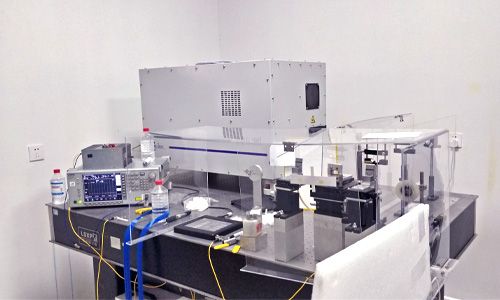
Energy decline is the most common excimer laser problem, and there are three common causes: first, natural aging of the laser gas, where changes in the working gas concentration inside the discharge chamber lead to output energy attenuation; second, contamination of optical lenses, where particles or organic matter adhere to the surfaces of cavity mirrors and reflective mirrors, reducing transmittance; third, insufficient stability of the high-voltage power supply, where fluctuations in discharge energy affect pulse output. For daily troubleshooting, first check the energy monitoring curve: if energy recovers after replacing with new gas, it is mostly gas aging; if there is still no improvement after gas replacement, focus on checking the optical lenses and high-voltage power supply.
The gas lifespan of an excimer laser is related to the operating repetition rate, single-pulse energy, and gas management method, and there is no fixed answer. Practical methods to extend gas lifespan include: using high-purity laser premix gas and maintaining gas line sealing; installing a fluorine gas filter to circulate and filter discharge products; and avoiding prolonged high-frequency idle discharge. For related consumables, please see laser premix gas and fluorine gas filter.
Lens contamination directly lowers output energy and, in severe cases, can also cause thermal damage. When cleaning, use dedicated wipes and high-purity solvents, gently wipe in a single direction, and do not dry wipe. Cavity mirrors, 45° laser reflective mirrors, and focusing lenses are precision optical components. If stains that cannot be removed or coating damage appear, they should be replaced promptly to avoid damaging the discharge chamber. For related specifications, see excimer laser cavity mirrors and 45° laser reflective mirrors, focusing lenses.
When restarting after a long shutdown, it is recommended to first check the gas line sealing and cooling water circuit; after startup, run idle discharge at a low repetition rate for a period of time to allow the gas state in the discharge chamber to stabilize, then gradually increase to the working repetition rate; at the same time, use an energy meter to retest the output and confirm that the energy has returned to the normal range before putting it back into processing.
If the energy continues to decline after replacing the gas and cleaning the lenses, or if phenomena such as unstable discharge, repeated alarms, or chamber arcing occur, it is recommended to stop the machine immediately and contact the manufacturer for maintenance. Do not disassemble the discharge chamber by yourself. Shengfang Technology provides excimer lasers and a full series of products including high-voltage power supplies, optical lenses, and accessories, as well as technical support. For details, please contact us, or browse the Product Center to learn about each product series.

